Appearance
Artwork and dependencies
The runtime core depends on Unreal CommonUI/CommonInput, Enhanced Input, UMG and Slate. It does not depend on ForgeExamples, MassForge, inventory, the documentation website or editor authoring tools. Engine fonts, meshes and utilities remain Unreal dependencies; they are not copied out as a separate art library.
The paths below identify editable sources in the development checkout. The separate source example ZIP mirrors the SVGs, atlas and asset register under ArtSource. Select that local source when reimporting or replacing an example texture; the core does not require the example action atlas or knight art.
| Shipped artwork | Source / replacement workflow |
|---|---|
| Shared button, header, window, combat panel and resource art | Nine small textures under /InterfaceForge/UIForge/Themes/Art, with editable SVG/raster sources and provenance hashes in Plugins/InterfaceForge/SourceAssets/UI. Independently code-authored geometry; no competitor pixels, image-generation output or game art. DA_ForgeEmber and DA_ForgeMoonsteel work without the example project. |
| UIForge plugin/documentation mark | Original composed-panel SVG with solid geometry; editable source and deterministic exports under ContentSource/Brand. User-selected design. |
| RPG frame, slot and courtyard map | Original editable geometry and deterministic rasterization in ContentSource/UI/Emberglass. Cartography uses the example world placements and explicit bounds; no reference-game pixels or image-generation model. Cinzel is unmodified SIL OFL1.1, with its full notice in Content/ForgeExamples/Licenses and source font folder. |
| Six action icons | Original code-authored SVG lines, polygons and circles under ContentSource/UI/AbilityVectors. The 3×2 AbilityAtlas.vector.png is imported as T_IFAbilities. Replace the texture or individual Blueprint entry brushes; preserve the cell mapping if reusing the atlas. |
| Six army command icons | Original SVG geometry under ContentSource/UI/CommandVectors, deterministically rasterized into CommandAtlas.vector.png and imported as T_IFCommands. The source example includes the vectors and provenance record under ArtSource. |
| CommonInput face glyphs | Original neutral vector UI material and four instances under /InterfaceForge/UIForge/Input. Replace controller data through CommonInput platform settings. No platform-brand icon license is supplied. |
| Progress / Sakura-style interior tint | Independently authored UI material/procedural drawing. Only inspected behavior is reproduced; no Sakura material package, graph or icon art is distributed. |
| Themes and feedback audio | Original theme data and short synthesized audio. Source WAVs are under the core plugin's SourceAssets/Audio; synthesis source is development tooling, not a runtime dependency. |
| Terrain backdrop and soil material | Original code-authored static mesh and deterministic baked numeric textures under ContentSource/World. Editable OBJ,512px albedo/normal and provenance records ship with the separate example. One shared12,800-triangle backdrop, two texture samplers, no image-generation model or new third-party art. |
| Castle, knight, blade and portrait | Bounded AshenForge-owned MassForge art imported into the separate example project, with remapped dependencies. The core contains none of these art packages. The portrait and minimaps are Unreal scene captures/bakes. |
| HumanMotion_v022 performances | Seven infantry skeletal clips selected from MassForge's edited/retargeted Quaternius CC0 Standard Universal Animation Library performances. The separate example retains the creator/source/license acknowledgement and provenance in ArtSource/Animation. No claim of exclusive ownership of the source motions. See example animation. |
The replaced AbilityAtlas.png was produced with an image-generation tool. Its source and original provenance remain intact in private Maintenance/ArtReview/GeneratedAbilityAtlas. Earlier engine captures containing that atlas are retained privately in Maintenance/ArtReview/PreviousGallery; they are excluded from the intended current distribution and product media. The new icon assets use the geometric sources above; they are not described as human hand-drawn or as proof about every asset in the product.
Game Master's UI design remains exclusive. Its widget trees, style assets, materials, source and reference screenshots are not included in distributable examples or the core. Inventory mechanics and external project code are outside this product.
For customer-provided icons, fonts, audio and textures, check that their terms allow source redistribution inside a plugin/template. Permission to use an asset in a compiled game alone is insufficient. No third-party icon pack or new custom product license was introduced by this replacement. The final package manifest records actual included files; marketplace declarations must describe that whole deliverable and its provenance.
Replace an icon and review its states
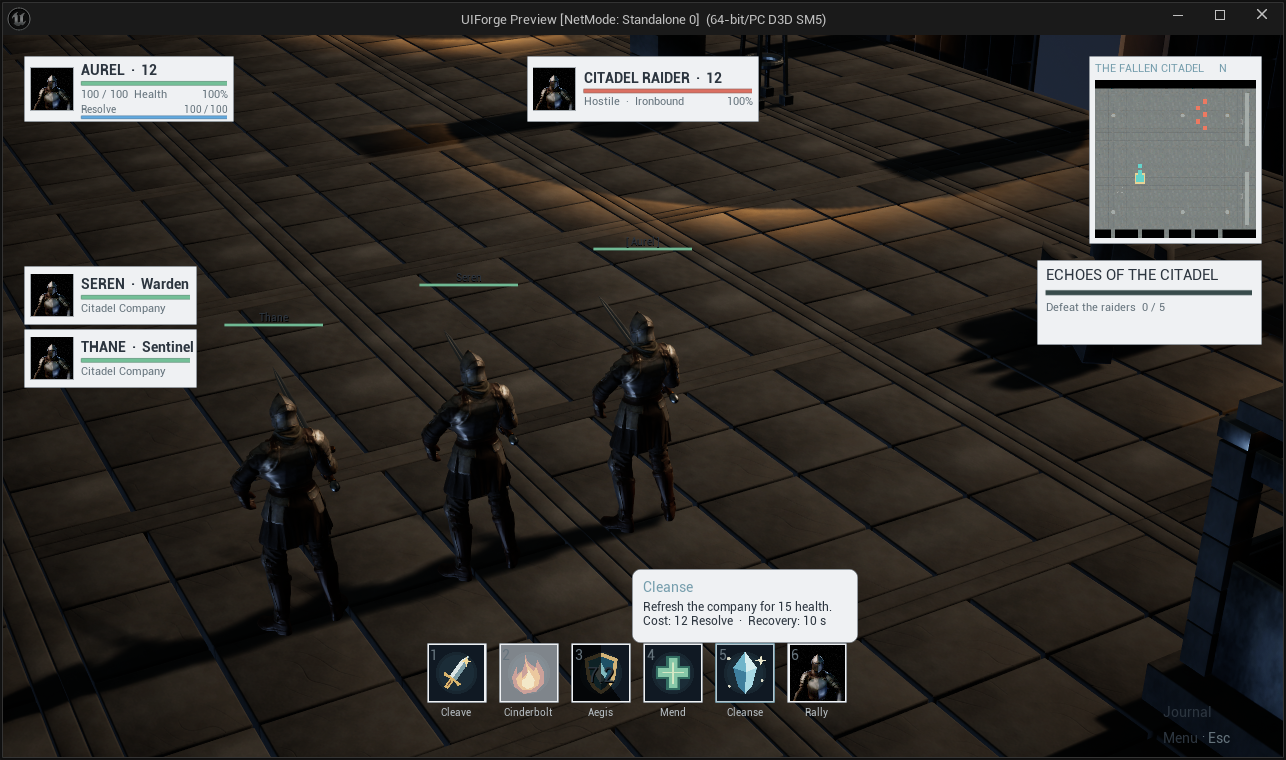
The example's saved WBP_IFAbilityEntry is an IFReadoutEntry with an ordinary Designer Image named IconImage. Set the presentation model's Icon, then call Notify Data Changed. For an individual texture, set the entry's Icon UV Min to(0,0) and Icon UV Max to(1,1); atlas users choose the cell rectangle instead. The widget changes its brush without source changes or synchronous texture loading: keep the chosen texture resident through the game's asset references/loader.
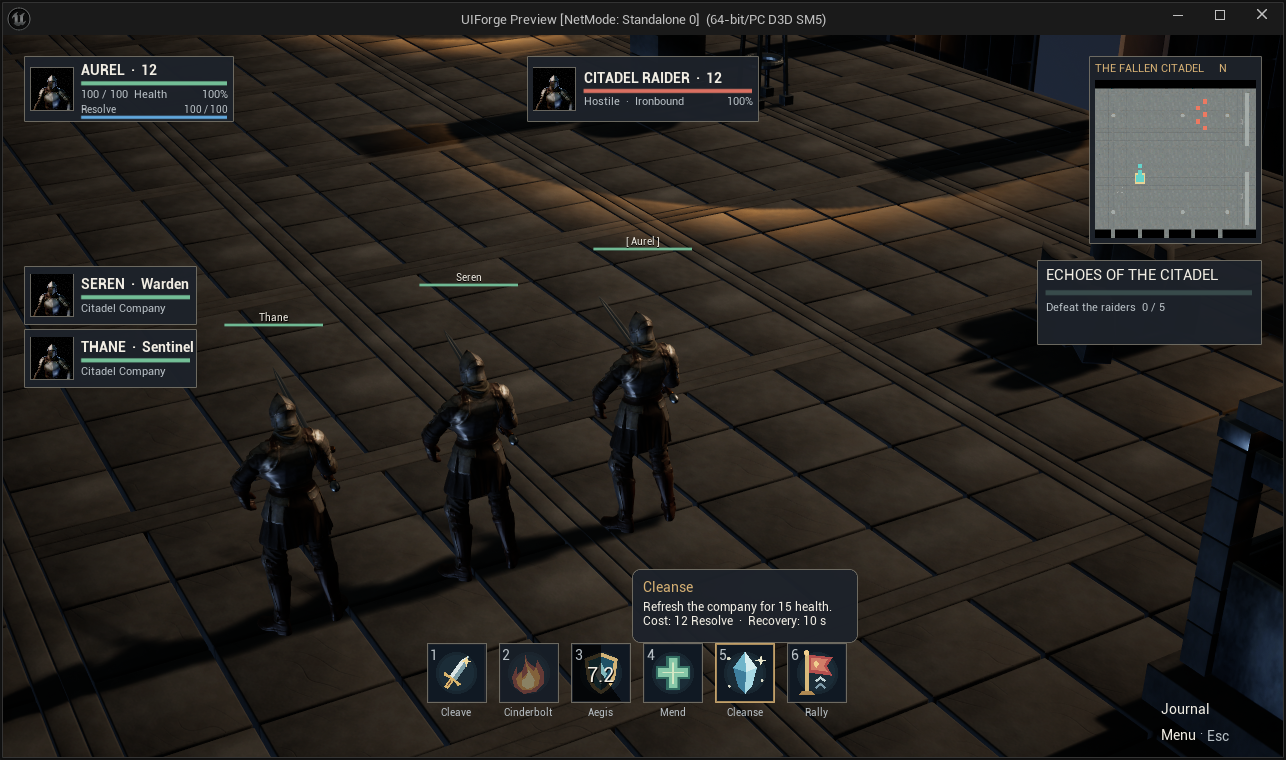
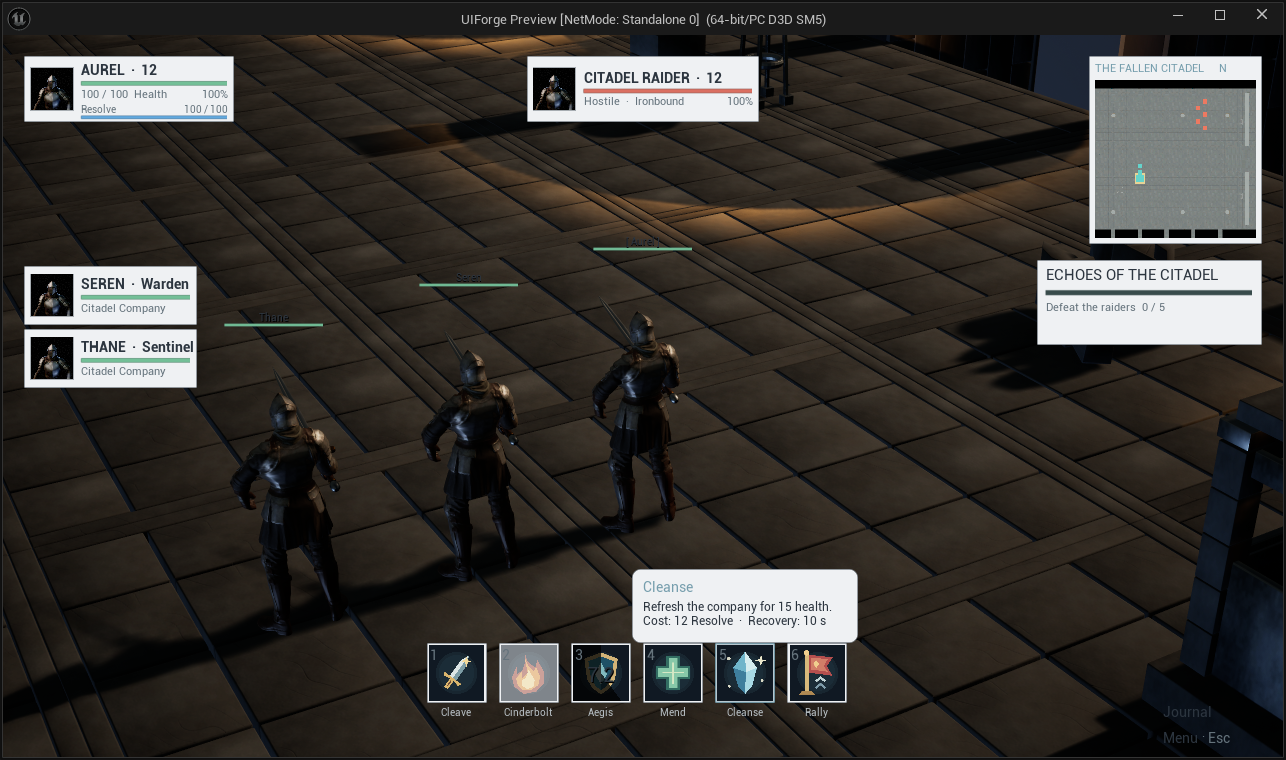
These actual UMG renders use temporary preview data to review available/unavailable actions, entry selection, navigation focus and the center-origin cooldown overlay. They are authoring checks of the existing widgets, not an additional gameplay example. The light palette is a temporary custom theme; floating action captions retain a contrasting local Theme Override because their background is the game world. A global light palette alone is not a finished light HUD design.